Comprehensive Rodent Exclusion Tips to Keep Your Home Critter-Free
If you’ve ever heard scratching behind the walls at two in the morning, noticed a mysterious hole in your pantry baseboard, or found small droppings sprinkled across your garage shelves, you know just how unsettling a rodent encounter can be. These aren’t the kinds of problems that politely announce themselves. Rodents sneak in quietly, build nests quickly, and settle in long before you realize what’s happening. As a local company providing rodent control Fort Worth homeowners rely on, we hear stories every week from people who were convinced their issue was “just one mouse”, only to discover that rodents had been entering through multiple hidden gaps for months.
Rodent issues escalate fast, but the good news is that exclusion, the process of keeping rodents out, is one of the most effective and permanent solutions available. Unlike trapping alone, which only removes the rodents currently inside, exclusion stops new rodents from entering altogether. It’s long-term, reliable, and crucial in cities like Fort Worth where rodent activity stays high due to our warm climate and a blend of urban and rural landscapes.
This guide walks you through what rodent exclusion really means, how to do it correctly, and the steps that matter most if you want to prevent infestations before they start. These insights come directly from years of helping homeowners across Fort Worth, Benbrook, Arlington, and surrounding communities protect their homes year-round.
Throughout this article, you’ll also find secondary terms, home rodent prevention, rodent entry point sealing, and Fort Worth pest protection, integrated naturally to support informational depth and search visibility.
What Is Exclusion Rodent Control?
Exclusion rodent control is the process of preventing rodents from entering your home by sealing every gap, crack, or opening they could use, no matter how small. This method focuses on long-term prevention rather than temporarily removing rodents that have already found their way inside. A proper exclusion begins with identifying structural vulnerabilities such as foundation cracks, gaps around plumbing, unsealed rooflines, loose soffits, garage door openings, and attic ventilation points that serve as access routes.
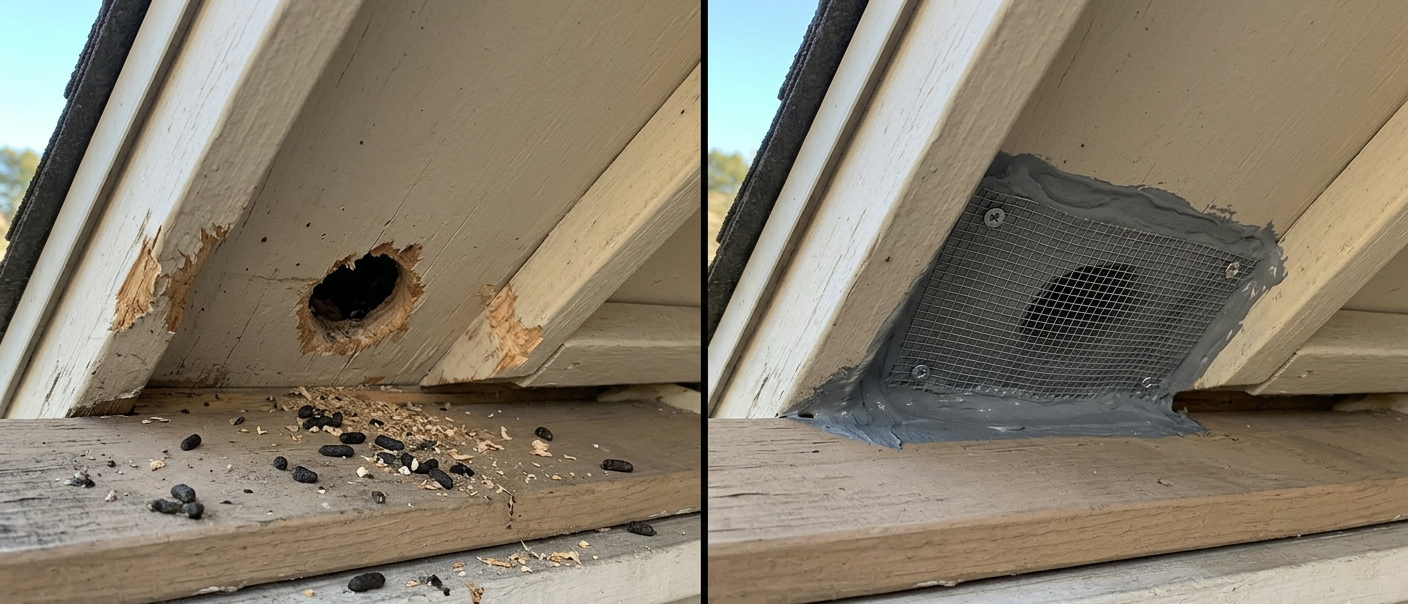
Once these vulnerabilities are found, they are sealed using rodent-proof materials like galvanized steel mesh, metal flashing, hardware cloth, concrete patching, and specialized, chew-resistant sealants. Because mice can squeeze through openings the size of a dime and rats can fit through holes the size of a quarter, exclusion requires precision. It’s considered one of the most effective and humane approaches to rodent control because it prevents rodents from accessing your home without relying exclusively on traps or poison, methods rodents often learn to avoid.
According to the National Pest Management Association, rodents enter over 21 million U.S. homes every winter through tiny openings most homeowners never notice. Exclusion creates a protective barrier that stops that from happening. When paired with sanitation and monitoring, exclusion offers the highest success rate for long-term rodent control Fort Worth residents can count on.
Why Rodent Activity Is So Persistent
Fort Worth homeowners face unique rodent challenges that differ from many parts of the country. Neighborhoods near the Trinity River experience seasonal rodent movement whenever temperatures dip. Older areas like Arlington Heights, Fairmount, and Mistletoe Heights feature beautiful, historic architecture, but also aging construction gaps that rodents love. Even newer communities near Alliance or West Fort Worth can experience issues because small foundation voids or roofline openings are often left behind during construction. These gaps can be no bigger than a pencil width yet offer rodents a direct path indoors.
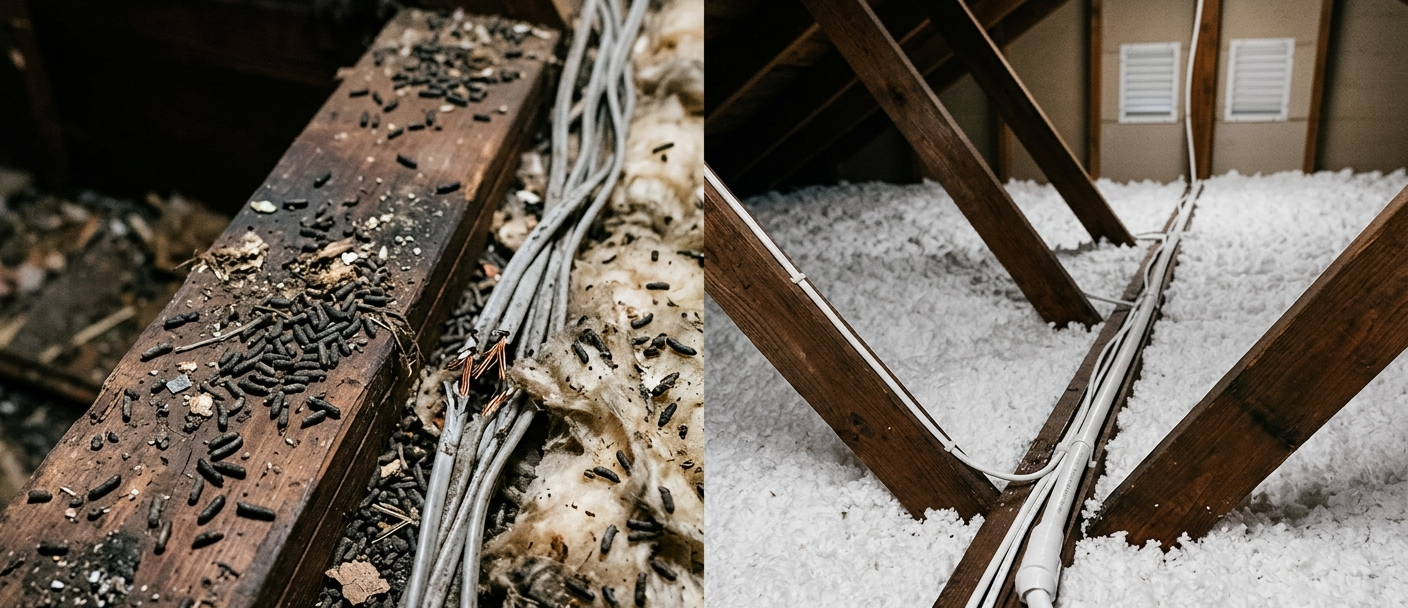
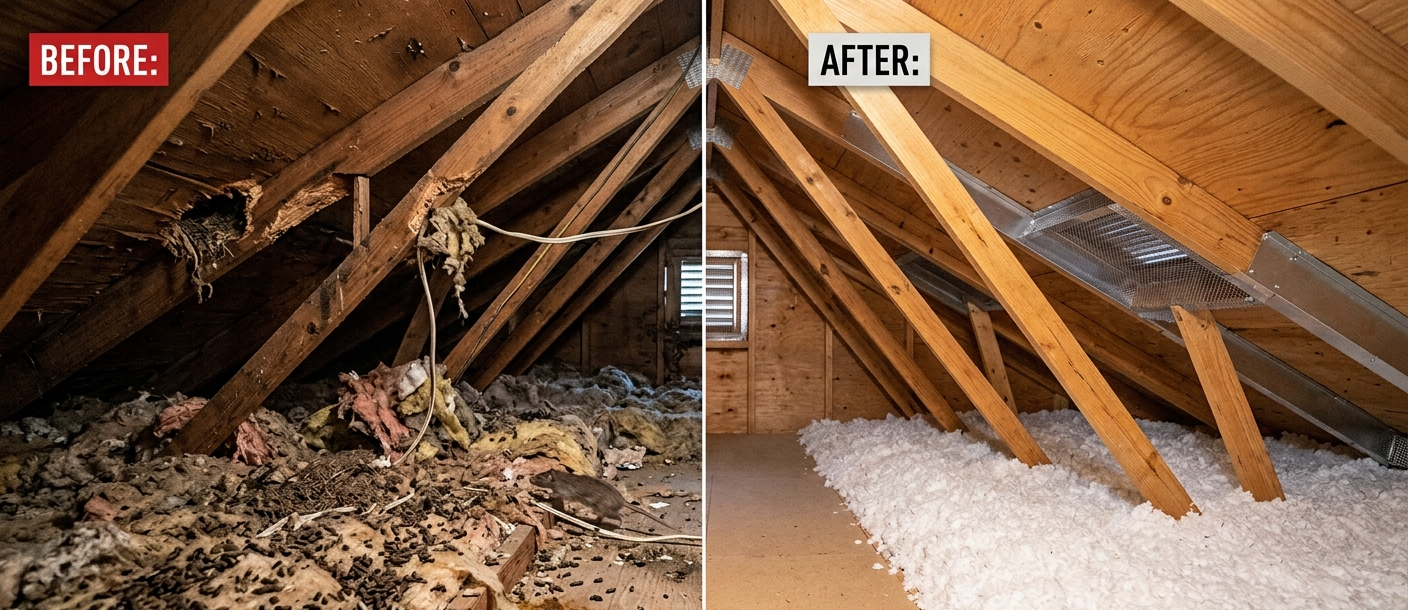
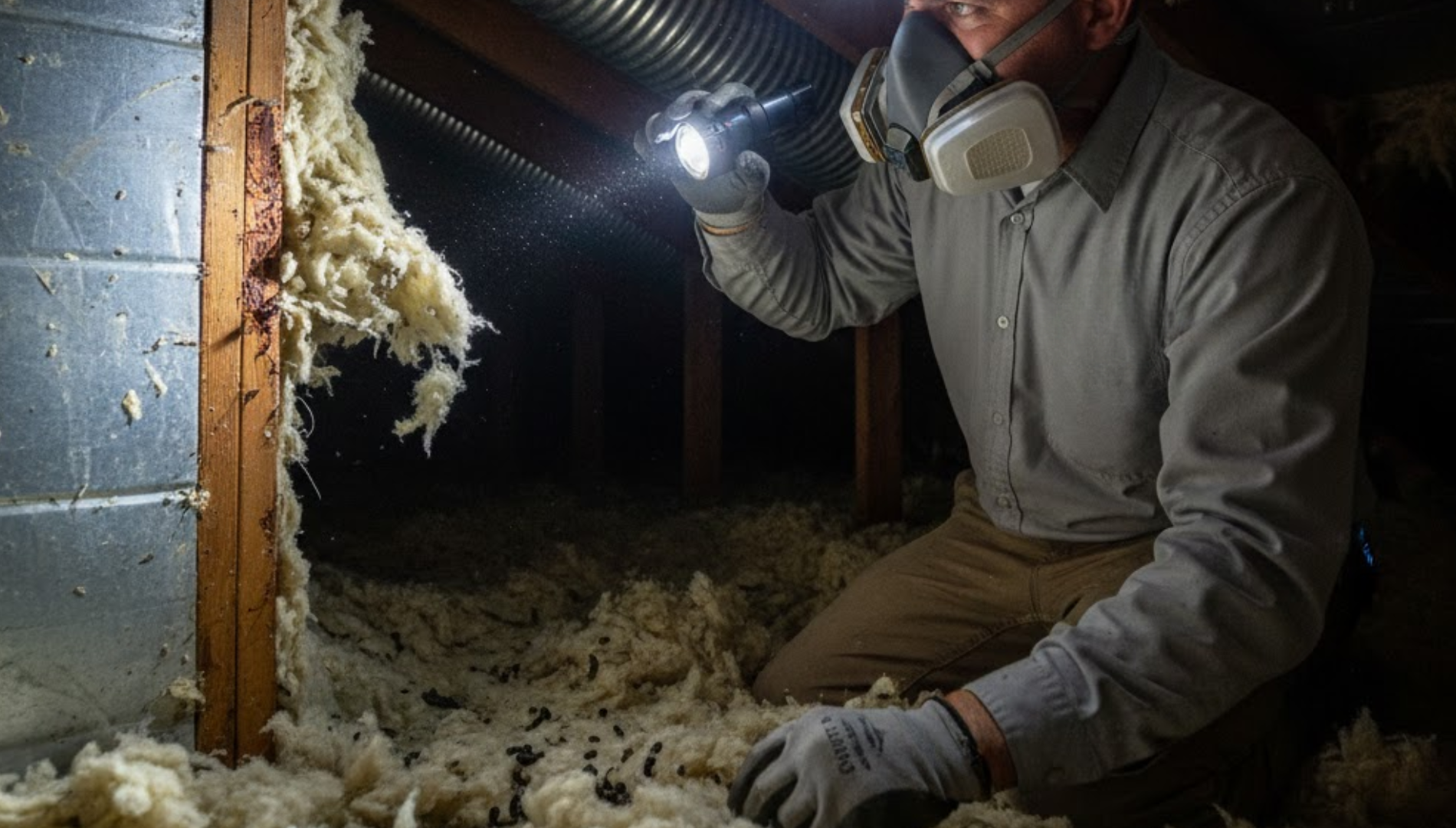
One Fort Worth homeowner recently called us after hearing unusual noises in her attic during a cold spell. She assumed it was roof panels shifting in the wind. After a detailed inspection, we found fresh droppings, shredded insulation, and three small openings near the gable vents, each no larger than a thumbprint. She was stunned that rodents could find such tiny gaps. But that is the reality of rodent behavior: once they discover an entry point, they return repeatedly. After sealing the openings, removing the remaining rodents, and re-insulating the attic, her home remained rodent-free.
This is the foundation of effective rodent control Fort Worth homeowners benefit most from: solve the root cause, not just the symptoms.
How to Do a Rodent Exclusion Properly
A proper rodent exclusion from Rodent Retreat begins with a detailed inspection of your entire property—inside and out. Most homeowners focus only on the obvious areas like doors and windows, but effective exclusion means examining rooflines, soffits, vents, A/C penetrations, garage door seals, weep holes, and every siding intersection where gaps commonly appear.
Inside the home, the attic, crawl spaces, basements, and utility rooms are inspected for light leaks, airflow gaps, drafts, or droppings that indicate rodent movement. Every opening must be sealed with gnaw-proof materials. Foam alone is ineffective because rodents chew through it easily. Instead, metal mesh, steel wool, hardware cloth, or metal flashing should be installed behind any foam or sealant to create a rodent-proof barrier.
Once all entry points are sealed, traps are placed strategically to remove any rodents still inside. The exclusion is only considered complete once several days pass with zero activity on traps, cameras, or monitoring devices. Many homeowners choose to get quotes from experts at this stage because exclusion can involve climbing ladders, accessing rooflines, and using specialized materials that aren’t always easy to install correctly.
When done properly, exclusion transforms your home into a place rodents cannot access, minimizing the need for ongoing trapping or baiting and offering long-term rodent control Fort Worth homeowners consistently trust.
What Is the Best Way to Keep Rodents Away?
The best way to keep rodents away is combining exclusion with sanitation and consistent outdoor maintenance. Rodents are attracted to three things: food, shelter, and warmth. If your home provides even one of these, rodents will look for an entry point. Sealing those access points is step one. But removing attractants is equally important.
Indoors, storing food in airtight containers, cleaning crumbs regularly, keeping garage items off the floor, repairing leaks, and maintaining secure trash storage all reduce the appeal of your home to rodents. Outdoors, trimming tree branches that touch or hover above the roof, storing firewood at least twenty feet away, and reducing clutter near the foundation make a substantial difference.
Seasonal patterns also matter in Fort Worth. As fall and winter approach, rodents begin seeking heated shelter. During spring, breeding season increases activity, making early inspections critical. When you understand how rodents think and what motivates them, your home becomes far less appealing, and long-term rodent prevention becomes much easier.
Keeping rodents away is ultimately about making your home as unwelcoming as possible, and exclusion is the foundation that makes that possible. Find helpful advice in How to Build and Maintain a Rodent-Resistant Home.
How Can Rodent Infestations Be Prevented?
Rodent infestations can be prevented by combining proactive sealing, reducing all food and water sources, and staying consistent with indoor and outdoor maintenance. Prevention starts with understanding rodent behavior. Rodents travel along walls, follow scent trails, and seek quiet, undisturbed areas where they can nest.
By keeping garages and attics organized, storing pantry items in sealed containers, fixing leaks promptly, removing clutter, and inspecting high-risk areas regularly, you create an environment rodents don’t want to settle in. Across Fort Worth, we see the same pattern again and again: most infestations start in a few predictable areas such as soffit gaps, A/C penetrations, garage door corners, and roofline intersections. When homeowners check these areas seasonally and fix vulnerabilities quickly, infestations become far less likely.
Prevention is not about reacting once you spot a rodent. It’s about creating a home where rodents simply can’t thrive, something that becomes significantly easier with professional rodent control Fort Worth support.
Hidden Entry Points Most Homeowners Miss
Some of the most common rodent entry points are nearly invisible to the untrained eye. We frequently find rodents accessing homes through lifted shingles, warped fascia boards, cracked brick mortar, and tiny foundational shifts. Dryer vents often have gaps where piping meets the exterior, and plumbing penetrations are notorious for small unsealed spaces. Chimneys, too, can allow rodents entry if the caps or screens are damaged or missing.
Many homeowners focus on the obvious, and overlook the subtle, structural gaps that give rodents deep access. Understanding these hidden entry points is essential for uninterrupted, long-term protection.
Final Thoughts
Rodent exclusion remains one of the most powerful ways to protect your home. Trapping can remove the rodents currently inside, but exclusion stops the cycle entirely by eliminating access points. In Fort Worth, where rodents stay active all year due to mild winters and abundant food sources, exclusion is more than a recommendation, it’s a necessity.
By sealing gaps, removing attractants, inspecting your home consistently, and understanding rodent behavior, you position yourself ahead of infestations rather than responding to them after they escalate. Taking action early always saves time, money, and stress, and provides lasting peace of mind.
If you’d like expert help inspecting your home or sealing rodent entry points, our team at Rodent Retreat is here for you. You can schedule professional rodent control Fort Worth services anytime. Reach out whenever you’re ready, we’d be glad to help keep your home protected and rodent-free year-round.
Follow our social media pages below: