Roof Rat Removal: 10 Signs You Have Rats Living in Your Attic
Hearing scratching or scurrying above the ceiling late at night can be alarming, especially when it happens repeatedly. While many homeowners initially assume the sounds come from tree branches or a settling house, they are often one of the earliest warning signs of roof rats. These agile rodents are common throughout Texas because the warm climate, mature trees, and expanding neighborhoods create ideal conditions for them to thrive. Understanding the signs early allows homeowners to address the problem before it leads to expensive repairs. Professional roof rat removal Texas services become much more effective when infestations are caught in their early stages.
Unlike Norway rats, which typically remain close to the ground, roof rats spend much of their time climbing trees, utility lines, fences, and rooftops before finding small openings into attics. Once inside, they build nests in insulation, contaminate stored belongings, chew electrical wiring, and reproduce surprisingly fast. This guide explains when roof rats are most active, the warning signs homeowners should never ignore, and why preventative roof rat removal Texas strategies provide lasting protection for homes across the state.
What Time Of Day Are Roof Rats Most Active?
Roof rats are primarily nocturnal, meaning they are most active shortly after sunset and remain active throughout the night until sunrise. During these hours, they search for food, water, and nesting materials while traveling through attics, wall cavities, crawl spaces, garages, and nearby trees. Because homeowners are typically sleeping when rodents are moving around, one of the earliest warning signs is hearing scratching, scampering, or chewing noises above the ceiling during the evening or early morning hours. Recognizing this predictable activity pattern is often the first step toward effective roof rat removal Texas before the infestation continues growing.
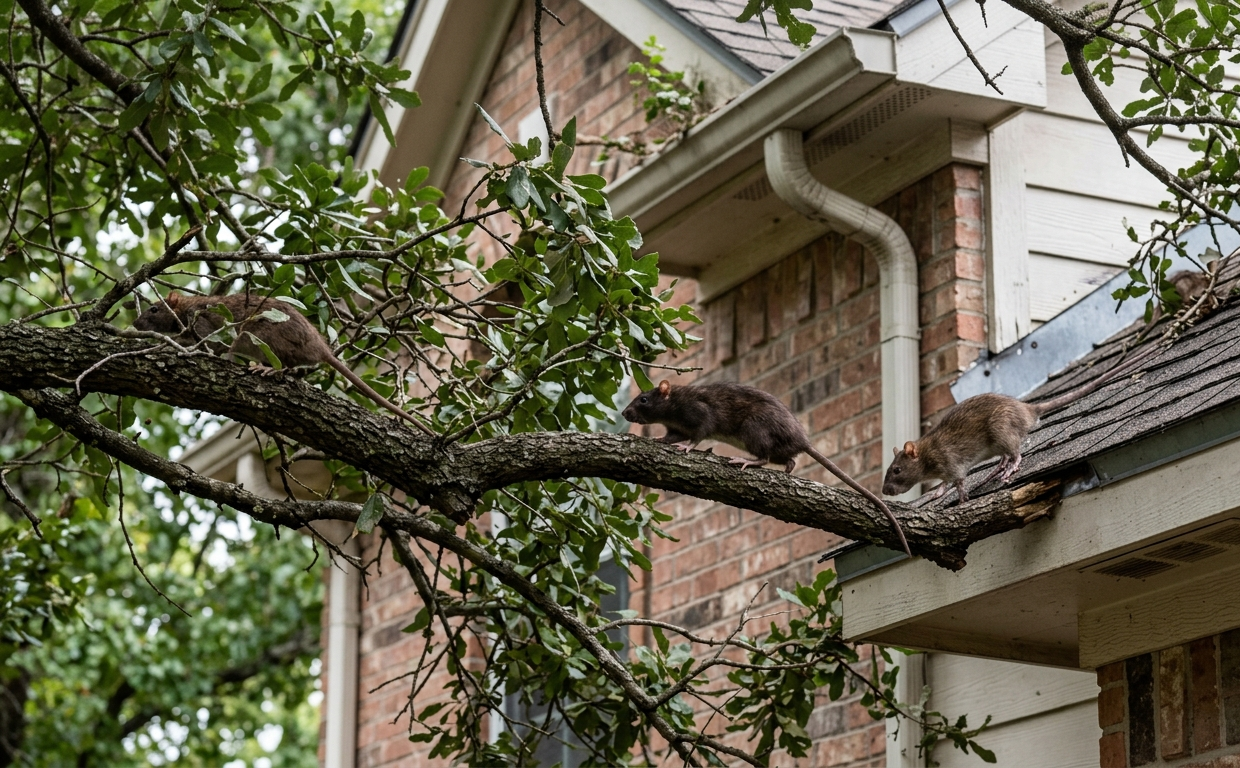
Throughout the daytime, roof rats generally remain hidden inside attics, insulation, wall voids, or thick landscaping where they feel protected from predators. Although occasional daytime sightings can occur, seeing roof rats during the day sometimes suggests the infestation has become overcrowded, forcing rodents to compete for food and shelter. Homes surrounded by mature trees are particularly vulnerable because overhanging branches create natural pathways that let roof rats access rooftops without ever touching the ground. Regular tree trimming, roof inspections, and early attic rat removal Texas evaluations significantly reduce these opportunities while strengthening long-term roof rat control efforts.
At Rodent Retreat, we frequently receive calls from homeowners who notice noises occurring at nearly the same time every night. These consistent sounds often indicate that roof rats have established travel routes between nesting areas and food sources. Rather than waiting until visible damage appears, we encourage homeowners to schedule inspections as soon as nighttime activity becomes noticeable. Early roof rat removal Texas services help prevent insulation damage, contaminated storage areas, electrical hazards, and much larger infestations that require more extensive restoration work.
What Are Three Signs That You Have A Rat Infestation?
Although roof rats spend most of their time hidden, they almost always leave behind evidence of their activity. One of the most obvious warning signs is repeated scratching, chewing, or scampering sounds inside ceilings, walls, or attic spaces after dark. These noises often grow louder as rodent populations increase and multiple rats begin moving through the attic. Homeowners who hear these sounds consistently should consider scheduling professional roof rat removal Texas before the infestation expands further.
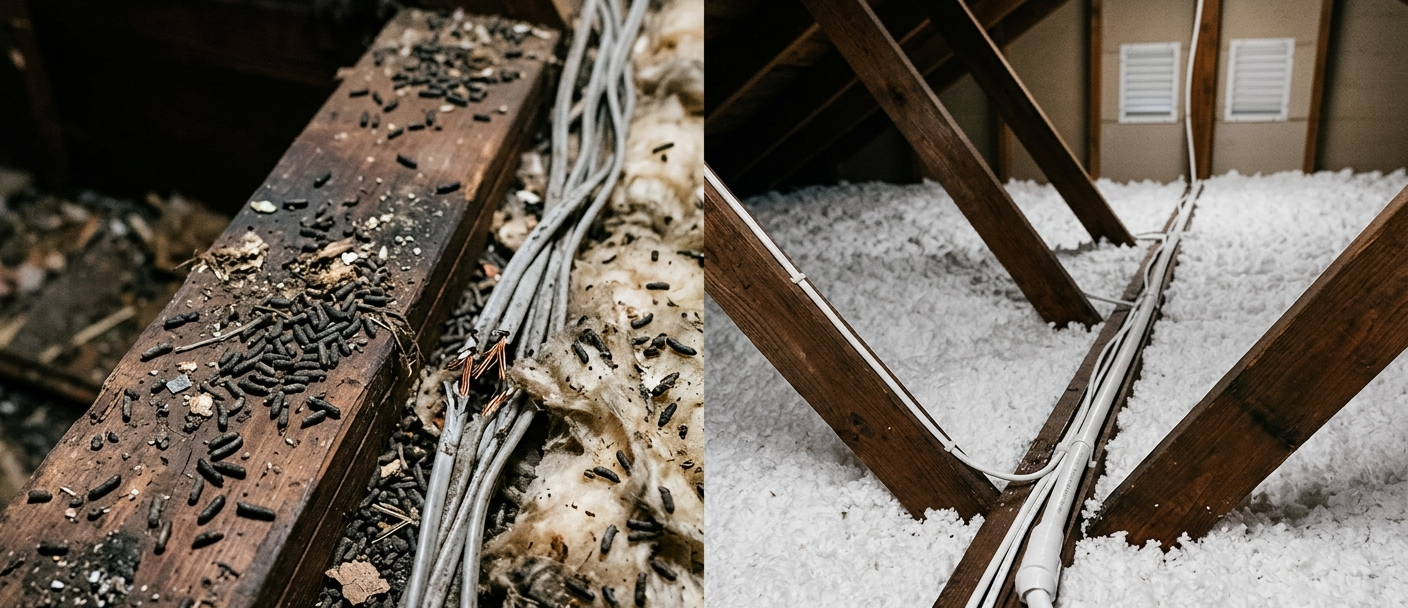
Droppings provide another strong indication that roof rats are actively moving throughout the home. Small, dark, spindle-shaped droppings are commonly found in attics, garages, pantries, storage areas, or along baseboards where rodents regularly travel. Fresh droppings are usually darker and slightly moist, while older droppings become dry and brittle over time. The third major warning sign involves gnaw damage. Roof rats constantly chew to keep their teeth from overgrowing, damaging wood framing, plastic piping, food containers, insulation, and electrical wiring. Damaged wiring poses a particularly serious concern because it increases the risk of electrical failures and fires. These warning signs demonstrate why prompt rodent control services in Texas are so important once rodent activity becomes apparent.
According to the Texas A&M AgriLife Extension Service, rodents can contaminate food, spread disease, and cause significant property damage through continuous gnawing and nesting activity. This is also an excellent opportunity to request quotes from multiple companies before selecting a provider. Comparing inspection methods, exclusion services, warranties, follow-up visits, and long-term prevention plans often provides far greater value than comparing prices alone. At Rodent Retreat, every roof rat removal Texas project focuses on identifying entry points, eliminating nesting areas, and preventing future infestations rather than simply removing the rodents currently visible.
What Is The Fastest Way To Get Rid Of Roof Rats?
The fastest way to eliminate roof rats is by combining a professional inspection, strategic trapping, exclusion work, sanitation, and ongoing monitoring. While store-bought traps may catch a few rodents, they rarely eliminate the entire infestation because new rats continue entering if access points remain open. Roof rats reproduce rapidly, making partial removal only a temporary solution. Effective roof rat removal Texas addresses both the rodents already inside the home and the conditions that allowed them to enter in the first place. This comprehensive approach produces longer-lasting results than relying on traps or bait stations alone.
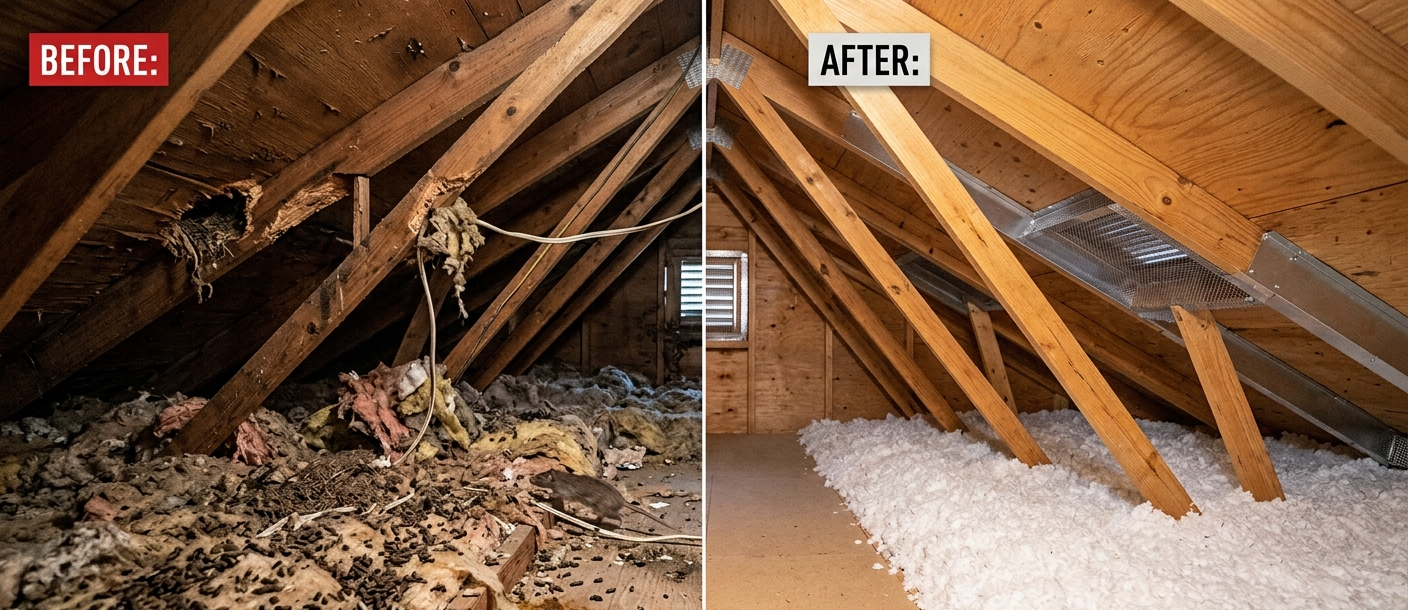
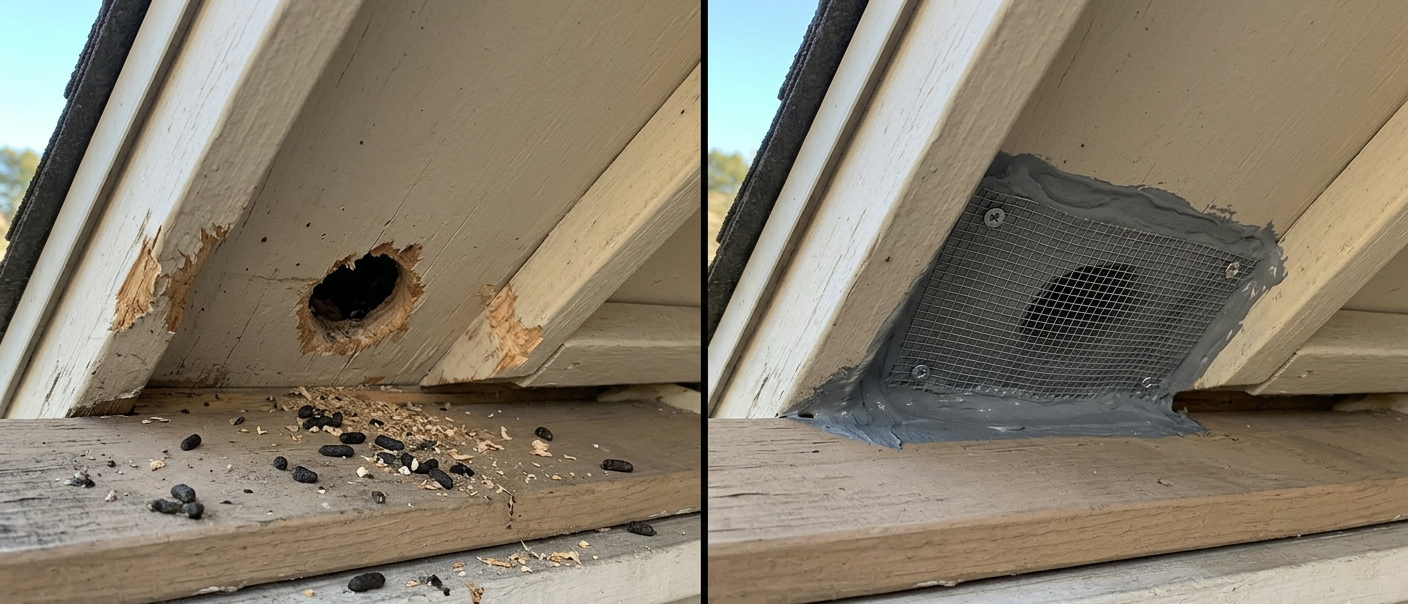
A professional inspection identifies where roof rats are entering the structure, where they are nesting, and how extensive the infestation has become. Technicians evaluate rooflines, soffits, attic vents, utility penetrations, chimneys, and other vulnerable areas for droppings, nesting materials, grease marks, and gnaw marks. Once travel routes and nesting locations are identified, strategically placed traps help reduce the rodent population while exclusion work seals the openings, preventing additional rats from entering. Thorough sanitation is equally important because contaminated insulation, nesting debris, urine, and droppings can continue to attract rodents if left behind. In many cases, damaged insulation may also require replacement after successful attic rat removal in Texas to restore both cleanliness and energy efficiency.
How To Tell If A Rat Infestation Is Gone?
Many homeowners assume the infestation has ended as soon as they stop hearing noises overhead. Although quieter nights are certainly encouraging, confirming that roof rats have been completely eliminated requires observing several additional indicators over time. Successful roof rat removal Texas is confirmed not only by the absence of rodents but also by the absence of new evidence that they are still using the property. Careful monitoring during the weeks following treatment provides the clearest picture of whether the infestation has truly been resolved.
Fresh droppings are one of the easiest signs to monitor. After thoroughly cleaning the affected areas, homeowners should regularly inspect attics, garages, storage rooms, and previous travel routes. If no new droppings appear after several weeks, rodent activity has likely stopped. Homeowners should also look for the absence of new gnaw marks, fresh nesting materials, grease marks along walls, damaged food packaging, or any disturbance of additional insulation. Nighttime noise is another valuable indicator, as roof rats are most active after dark. If scratching, chewing, or scampering sounds disappear completely for an extended period, especially during the hours when rodents are normally active, the population has likely been removed. Continuing to inspect previous entry points supports long-term rodent control in Texas while reducing the risk of future infestations.
Follow-up inspections remain an important part of long-term prevention because rodents may attempt to return if new openings develop around the roofline or foundation. Tree growth, weather damage, aging construction materials, and routine wear and tear can all create new access points over time.
Why Do Roof Rats Choose Attics?
Attics provide nearly everything roof rats need to survive. They offer warmth, shelter, privacy, nesting materials, and protection from predators while remaining largely undisturbed by homeowners. Thick insulation creates excellent nesting material, while stored boxes, wooden framing, HVAC ductwork, and electrical wiring provide countless hiding places. These conditions make attics one of the most attractive locations for roof rats inside residential structures, which is why early roof rat removal Texas becomes so important before colonies continue expanding.
Texas weather also contributes to attic infestations. During periods of extreme summer heat, heavy rainfall, or cooler winter temperatures, attics provide a stable indoor environment that protects rodents from harsh outdoor conditions. Homes located near mature trees, utility lines, wooded areas, or dense landscaping are particularly vulnerable because roof rats can travel directly onto rooftops without crossing open ground. Once inside, homeowners may remain unaware of the infestation for weeks or months because attic spaces are rarely inspected. By the time scratching sounds, droppings, or damaged insulation become noticeable, multiple generations of rodents may already be present. Prompt attic rat removal in Texas significantly reduces the amount of structural damage that develops during these hidden infestations.
At Rodent Retreat, attic inspections are an essential part of every roof rat removal Texas service. We carefully evaluate nesting areas, travel routes, insulation damage, entry points, and structural vulnerabilities before recommending a customized treatment plan. Addressing the full scope of the infestation rather than simply removing visible rodents helps homeowners achieve more reliable long-term results while minimizing the likelihood of recurring attic infestations.
How To Keep Roof Rats From Coming Back?
Successfully eliminating roof rats is only the beginning. Long-term protection depends on making the property less attractive to rodents while preventing them from finding new ways inside. Without proper exclusion and routine maintenance, even a professionally completed roof rat removal Texas project can be followed by another infestation if new entry points develop. Preventative maintenance helps homeowners protect both their attic and the rest of the home from future rodent activity while reducing the need for repeated treatments.
Start by inspecting the home's exterior several times each year. Look carefully around roof vents, soffits, fascia boards, chimneys, attic vents, utility penetrations, roof flashing, and garage doors for small gaps or damaged materials. Even openings that appear insignificant can provide enough space for roof rats to enter. Tree maintenance is equally important because roof rats are exceptional climbers that frequently use overhanging branches as bridges to rooftops. Keeping limbs trimmed several feet away from the house greatly reduces access opportunities while improving the effectiveness of long-term roof rat control. Dense shrubs and climbing vines should also be maintained so they do not create hidden travel routes along exterior walls.
Good sanitation further discourages rodent activity. Store bird seed and pet food in sealed containers, secure trash bins with tight-fitting lids, remove fallen fruit promptly, and avoid leaving food outdoors overnight. Periodic attic inspections also help homeowners detect fresh droppings, nesting materials, damaged insulation, or newly developed entry points before another infestation becomes established.
Why Early Detection Saves Time And Money
One of the biggest advantages of recognizing roof rat activity early is limiting the amount of damage rodents can cause inside the home. Small infestations are generally much easier to eliminate because fewer rodents are present, nesting areas remain localized, and structural damage is often minimal. Once roof rats reproduce inside an attic, however, the population can increase rapidly. Larger infestations typically result in greater contamination, more extensive insulation damage, additional chewing of electrical wiring, and increased repair costs. Early roof rat removal Texas helps homeowners avoid these escalating problems while restoring their property more quickly.
Routine attic inspections provide an opportunity to identify warning signs long before significant damage develops. Fresh droppings, nesting materials, chewed insulation, unusual odors, and scratching sounds should never be ignored because they often indicate the early stages of rodent activity. Addressing these symptoms immediately allows homeowners to resolve the infestation before multiple generations of roof rats become established. In many cases, prompt attic rat removal in Texas also prevents expensive secondary repairs involving drywall, HVAC systems, electrical wiring, or stored belongings.
Preventative action provides peace of mind as well as financial benefits. Homeowners who inspect their roofs regularly, maintain surrounding landscaping, seal potential entry points, and schedule professional evaluations when warning signs appear are much less likely to experience recurring infestations. Consistent roof rat control protects both the home's structural integrity and the family's comfort while reducing the likelihood of emergency repairs caused by long-term rodent activity. Find helpful advice in Is It Safe to Be in the House After Pest Control Treatment?
Final Thoughts
Roof rats are persistent pests that rarely leave on their own. Their ability to climb, squeeze through surprisingly small openings, and remain hidden inside attics allows infestations to grow quietly for weeks or even months before homeowners recognize the warning signs. Listening for nighttime noises, checking for droppings, inspecting for gnaw damage, and maintaining your home's exterior all contribute to a proactive roof rat removal Texas strategy that minimizes long-term damage.
Professional inspections, thorough exclusion work, sanitation, and ongoing monitoring provide homeowners with the strongest protection against future infestations. Whether the concern involves unusual attic noises, contaminated insulation, or damaged wiring, responding quickly almost always leads to easier, more affordable solutions. Investing in dependable rodent control in Texas today helps protect homes from much larger structural repairs tomorrow while keeping families safer and more comfortable year-round.
Schedule A Roof Rat Inspection
If you've heard scratching sounds in your attic or noticed other signs of rodent activity, our team is here to help. We provide comprehensive roof rat removal services in Texas that include professional inspections, customized trapping strategies, exclusion work, sanitation recommendations, and long-term prevention to keep rodents from returning. Every home receives a thorough evaluation so we can identify entry points, nesting locations, and the underlying conditions contributing to the infestation.
As Rodent Retreat, we are committed to helping homeowners protect their properties through complete roof rat removal Texas solutions that address both current infestations and future prevention. Our experienced technicians explain every recommendation clearly and develop customized treatment plans that deliver lasting results. Reach out today to learn more about our rodent control services or schedule a professional roof inspection. We are ready to help you protect your attic, your home, and your peace of mind.
Follow our social media pages below: